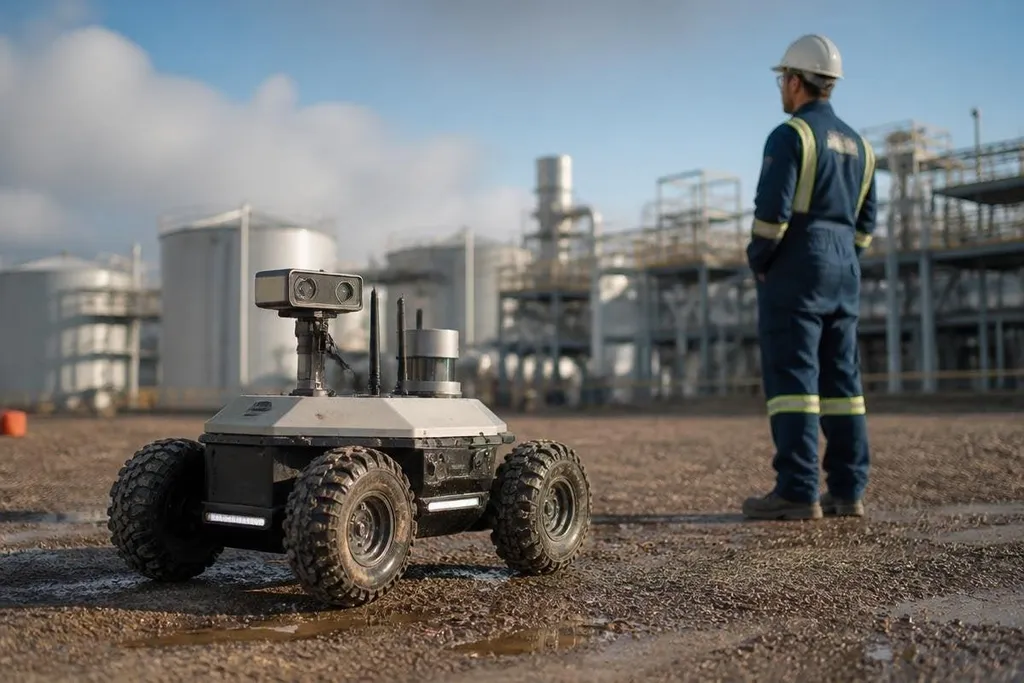
A robot working at an energy site may spend more time waiting for a safe operating window than moving. That makes uptime, fault recovery, and maintenance records more useful than a short video of a machine crossing rough ground.
This article looks at how to judge the global race to build better energy robots when public claims outpace the available proof.
- The job comes first: inspection, repair, transport, and emergency response need different robot designs.
- The hard test is downtime: a machine must handle weather, poor communications, and safe access around live equipment.
- The missing number matters: without field hours, intervention rates, and maintenance data, performance claims remain open questions.
What an energy robot has to do
“Energy robot” covers several jobs. A machine might inspect a solar array, carry tools across a wind site, check a pipeline, or work near electrical equipment. Each task changes the robot’s sensors, mobility, battery needs, and safety controls.
Inspection work may call for cameras, thermal sensors, or other tools that can find a fault without placing a person in a difficult location. A repair robot needs more: it must hold position, manage force at the tool, and recover when a part does not move as expected.
The site sets the limits. Mud affects wheels and legs. Salt air can damage exposed parts. A remote location can turn a small motor fault into a long service delay. A robot that works indoors may need a different enclosure, communications link, and recovery plan outdoors.
The numbers that should settle the argument
Energy companies need records from real work. A robot’s top speed tells you little if it spends half its shift waiting for a remote operator or returning to charge.
The useful figures are practical ones: hours worked per day, distance covered between charges, tasks completed without human control, time spent recovering from faults, and the number of site visits needed for maintenance. Safety stops also matter because each stop can pause an inspection or repair task.
A fair test should state the site conditions. A result from a clean training area cannot answer questions about rain, dust, uneven ground, radio dead spots, or equipment placed at different heights. The machine’s task success rate needs the same context.
Energy robot claims need a named machine, site, task, test date, and measured result. Robot24.com energy robotics coverage can connect those details to inspection and maintenance reports before the section turns to the limits at energy sites.
Where the race gets difficult
Energy sites are spread across large areas, and many contain equipment that cannot be treated like a normal factory station. A robot may need to share space with workers, vehicles, weather systems, and machinery that must stay in service.
Remote control can help when a robot reaches a task its onboard software cannot handle. It also adds a communications dependency. If the link drops, the machine needs a safe state and a clear way to resume work without creating a second problem.
Battery life creates another limit. A robot that needs frequent charging may spend less time working than its specification suggests. Swappable batteries can reduce waiting, but they add handling steps, storage needs, and another part that can fail.
The business case also depends on the cost of supervision. If one operator watches one robot for most of a shift, the machine may reduce physical exposure without reducing labor demand by much. That can still matter, but it is a different result from unattended operation.
How to assess a new claim
Use this checklist before treating a product announcement as proof of progress:
- Name the task: identify the exact inspection, transport, or repair job.
- Check the setting: record weather, terrain, distance, equipment type, and communications limits.
- Ask for work hours: separate a short demonstration from repeated site operation.
- Count human input: note when an operator takes control, resets the machine, or changes the plan.
- Price the whole system: include charging, software, training, spare parts, and site changes.
- Mark the unknowns: list the safety approvals, maintenance data, and failure rates that remain unpublished.
That last point keeps the comparison fair. A new robot can have a useful design while its cost, service life, and behavior around live assets remain unproven.
I’d judge the field by the quality of its records, not the size of its promises. The next useful milestone is a public account of one robot working through a full site schedule, with downtime and human intervention shown beside the successful tasks.